
The timeline is adopted from the research notes and images of Ted McKie with grateful thanks.
Long ago…
A sulphurous spring issues from the miry ground. The surrounding beeches are home to large flocks of wood pigeons, which seem to be attracted by the water, and thus the spring came to be known locally as the Doo Well.
1783
Countess of Traquair records in her diary about a guest visiting the spa in Innerleithen
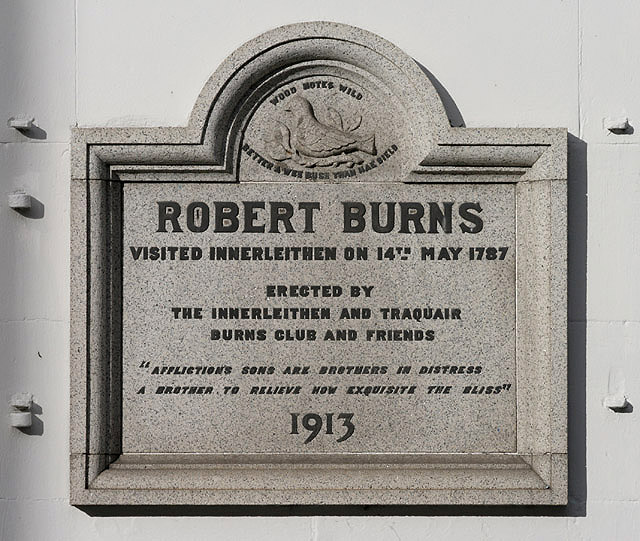
May 1787
Robert Burns, noted in his journal that he had “visited Inverleithen, a famous Spaw”
1796
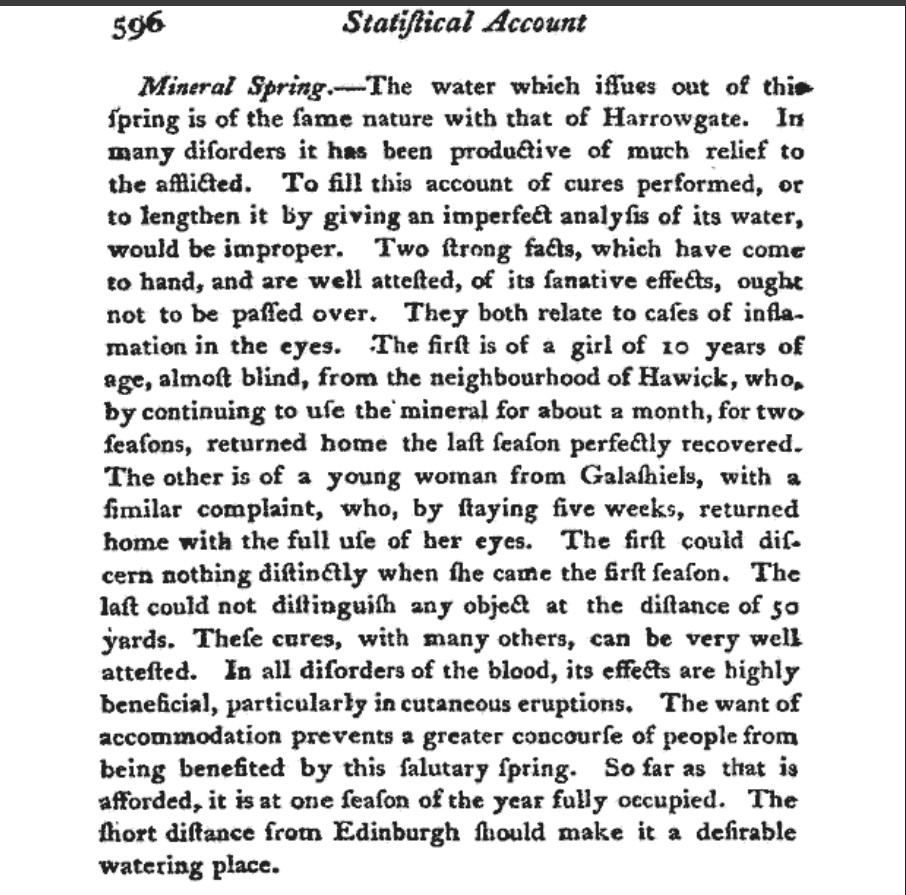
Cures effected by the mineral water reported in the First Statistical Account of Scotland.
1823
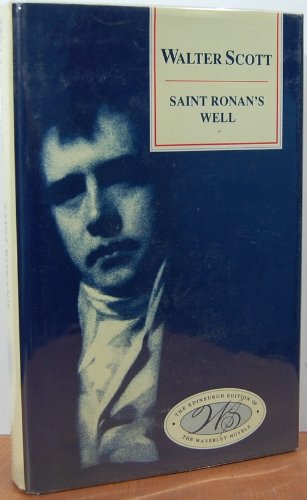
Walter Scott publishes his novel “St Ronan’s Well”
1824
Earl of Traquair commissions a survey of the mineral spring. It is recommended that the two types of spring water are conduited and stored in tanks.
1826
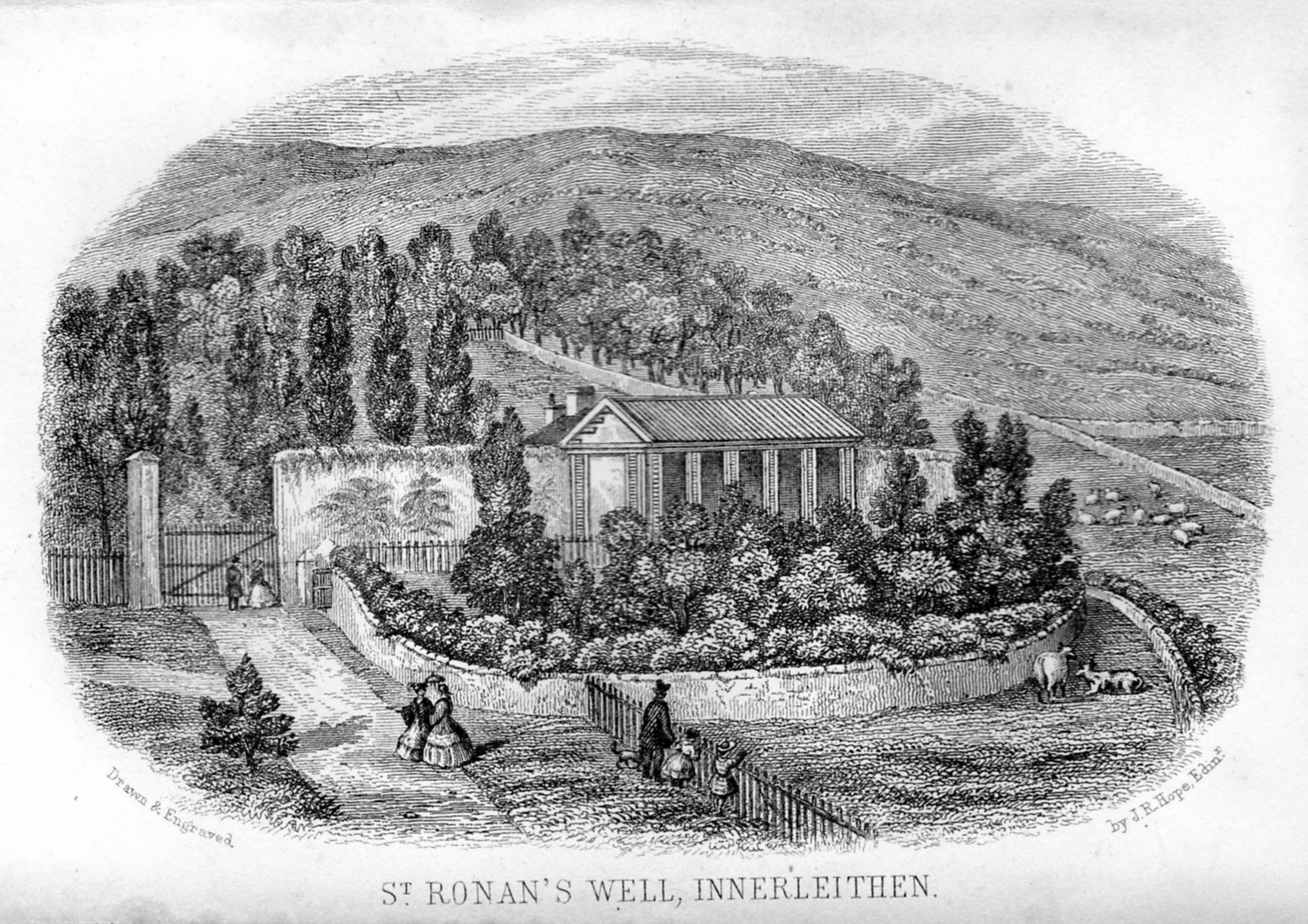
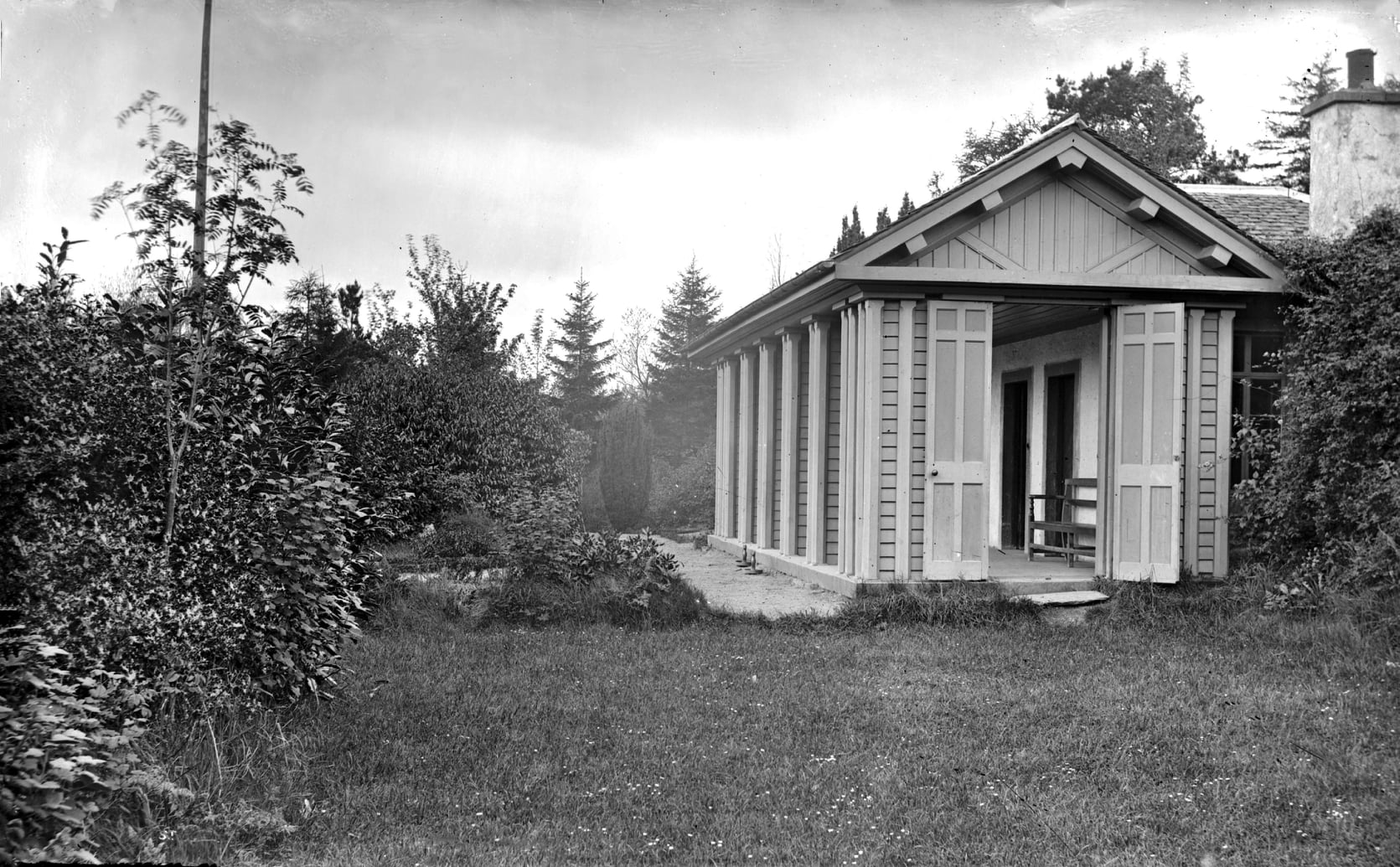
A “neat Veranda” designed by William Playfair is built at the spa for the comfort of visitors.
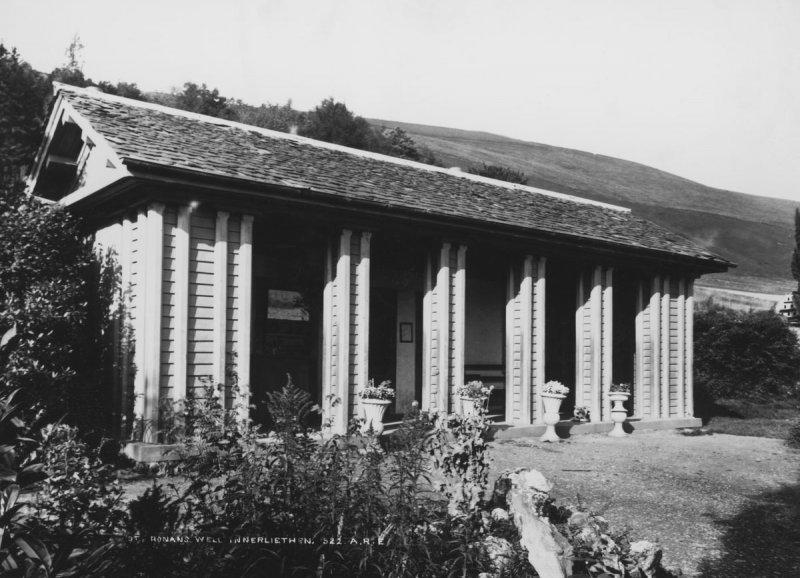
1830
Innerleithen is thriving as a summer tourist resort according to “Guide through Scotland”.
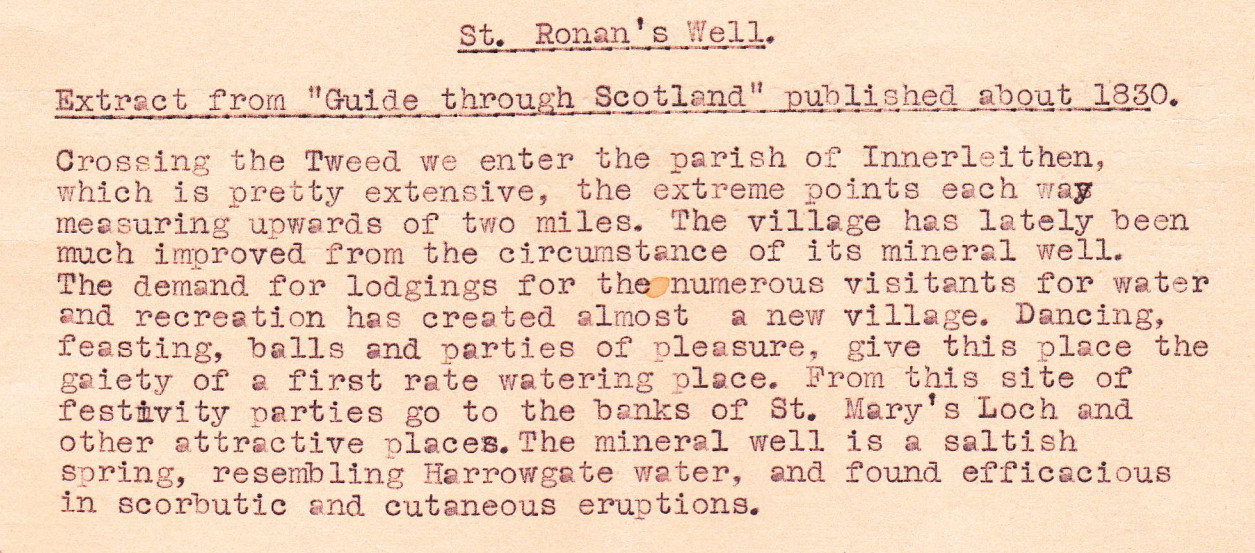
1834
Popularity confirmed in the Second Statistical Account of Scotland including details of chemical analysis of the waters carried out by Dr Fyfe.

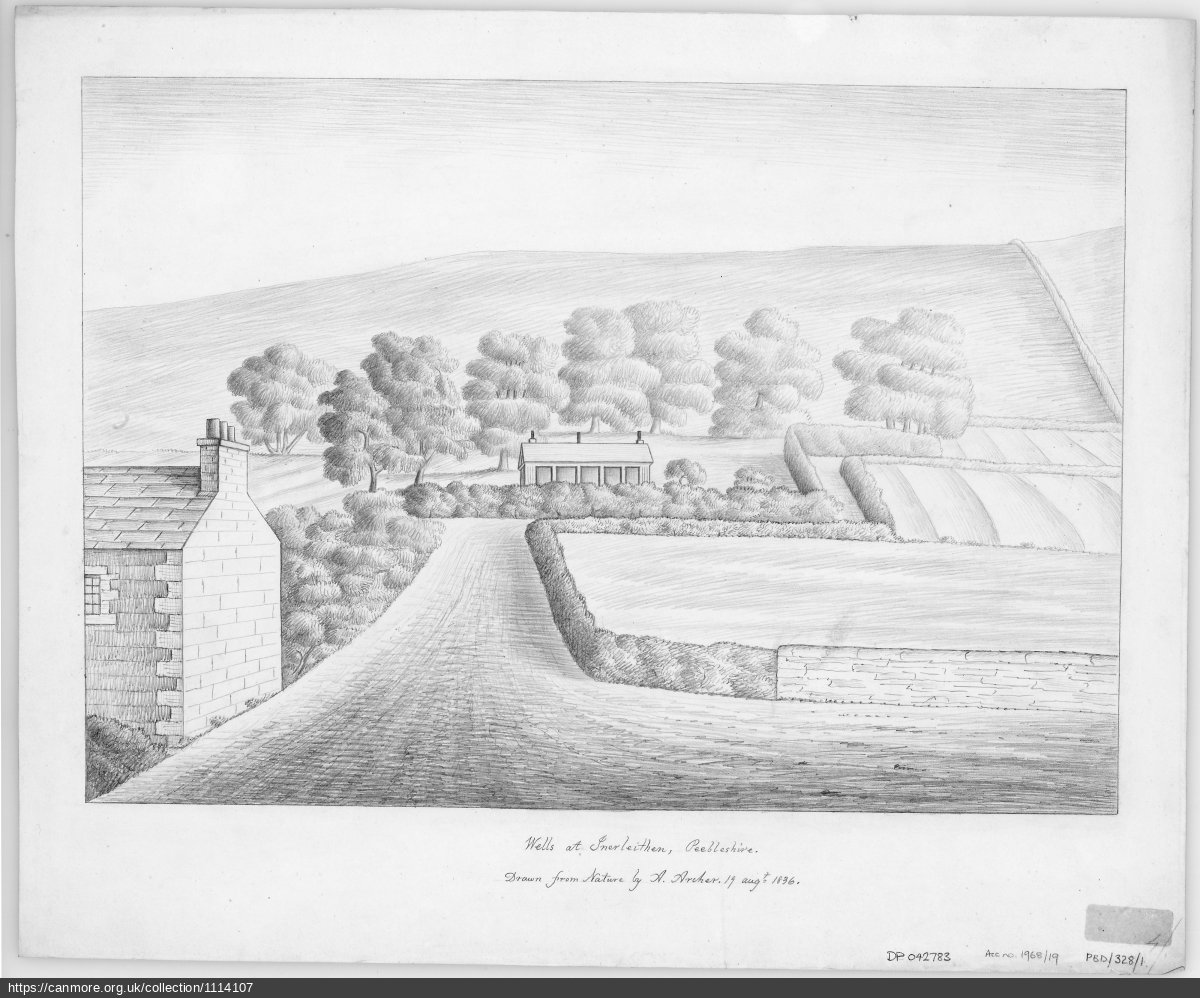
1836
Alexander Archer sketch.
© Courtesy of HES (Papers of Alexander Archer, artist, Edinburgh, Scotland)
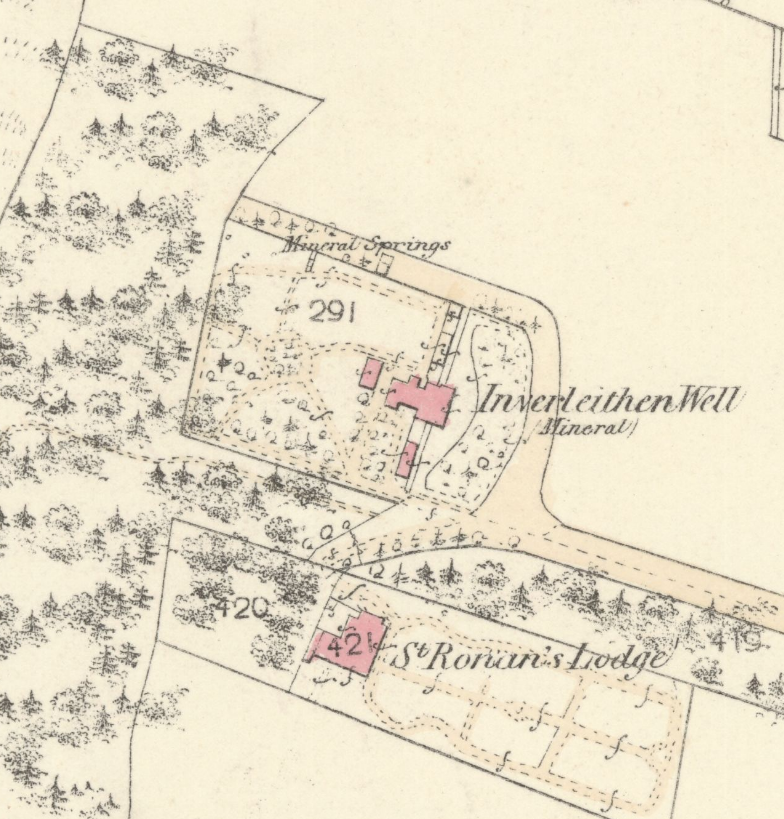
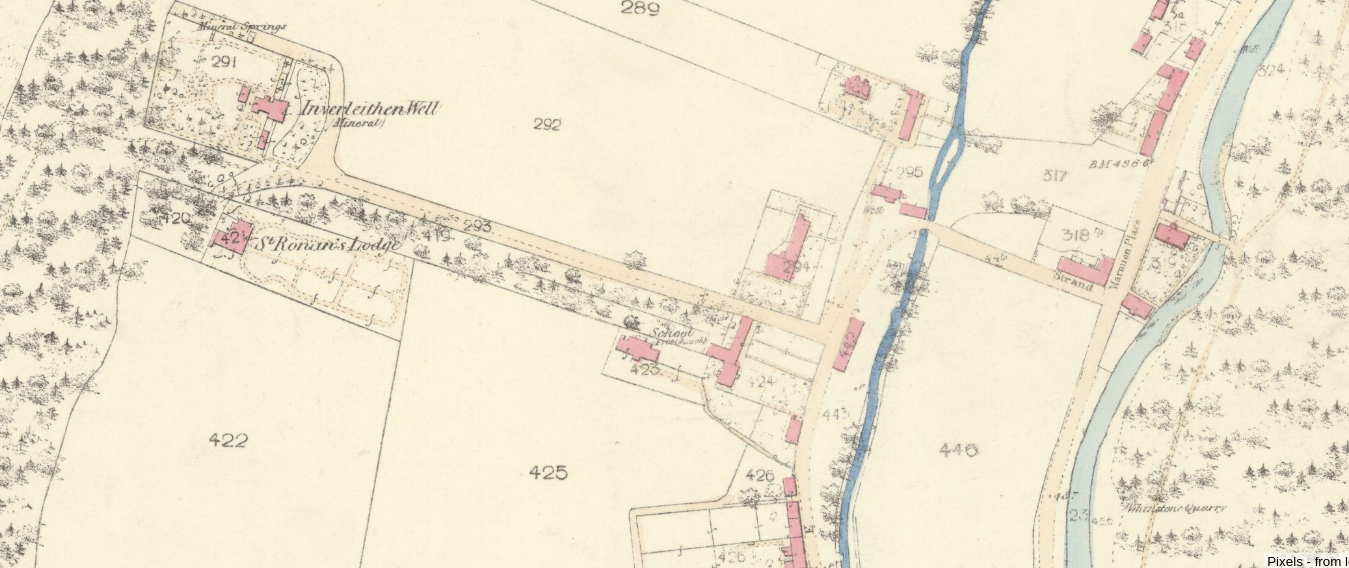
1857
Ordinance Survey Map
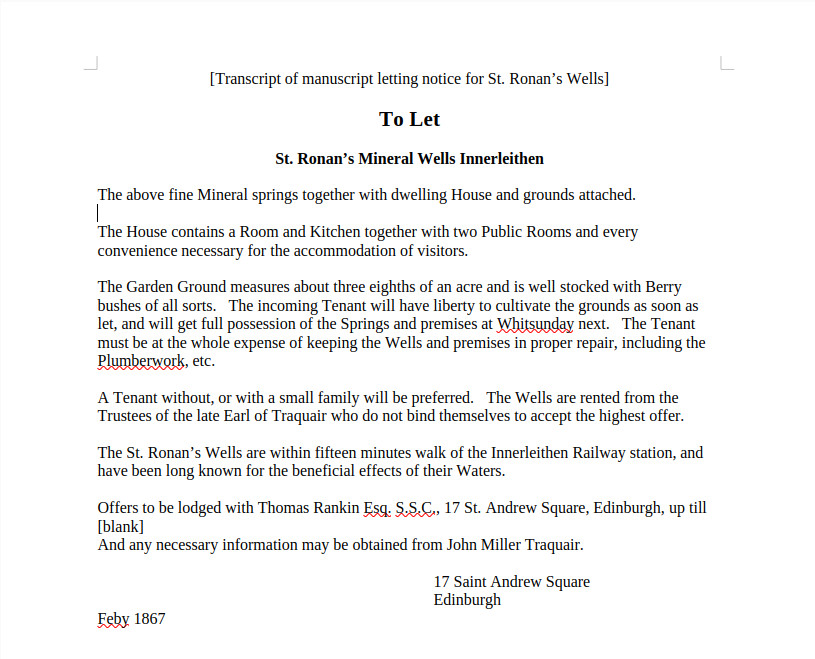
Feb 1867
A letting notice is issued to find a tenant.
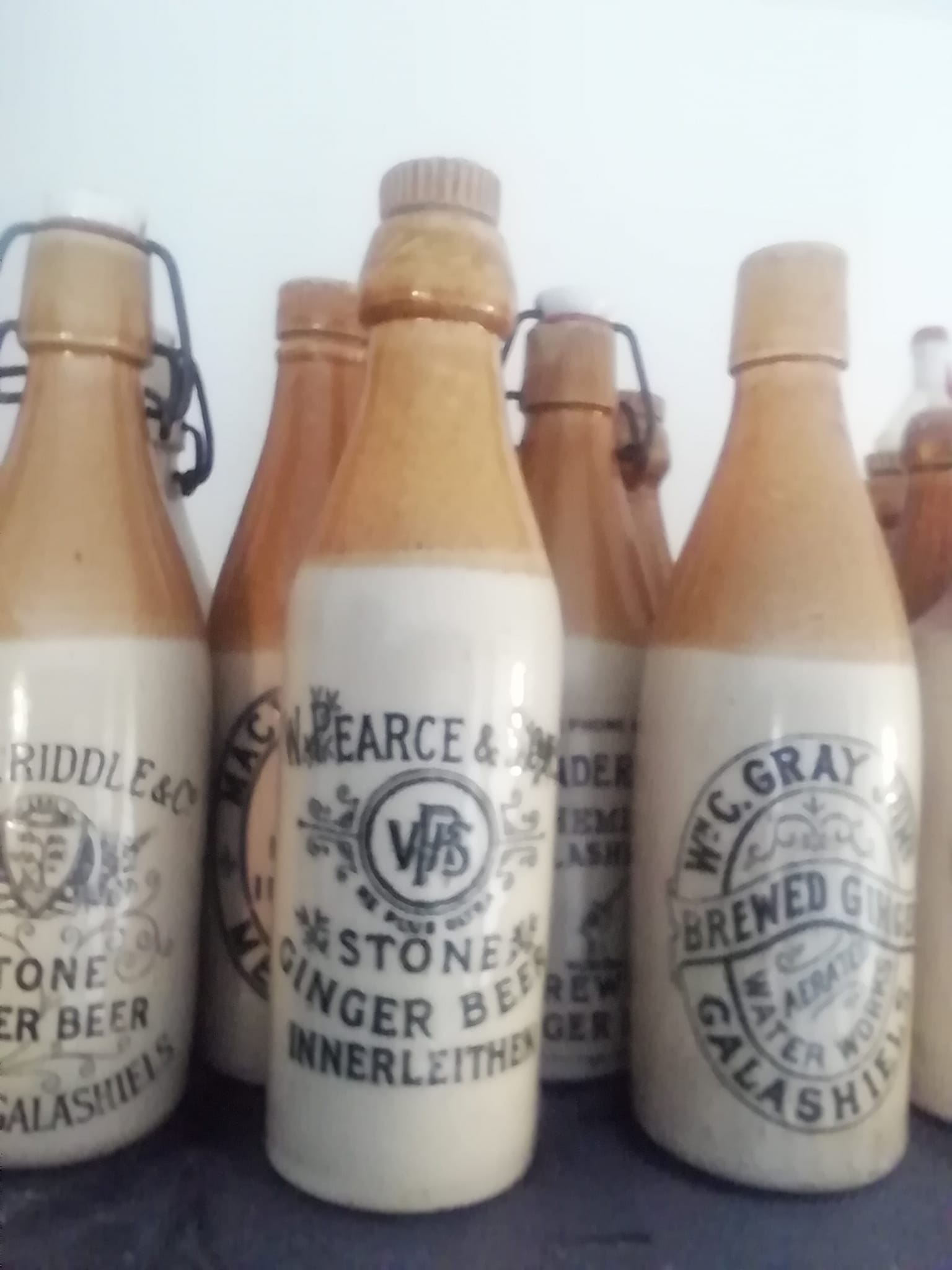
1877
William Pearce & Sons, Aerated Water Manufacturers commence production.
1890
November 1895
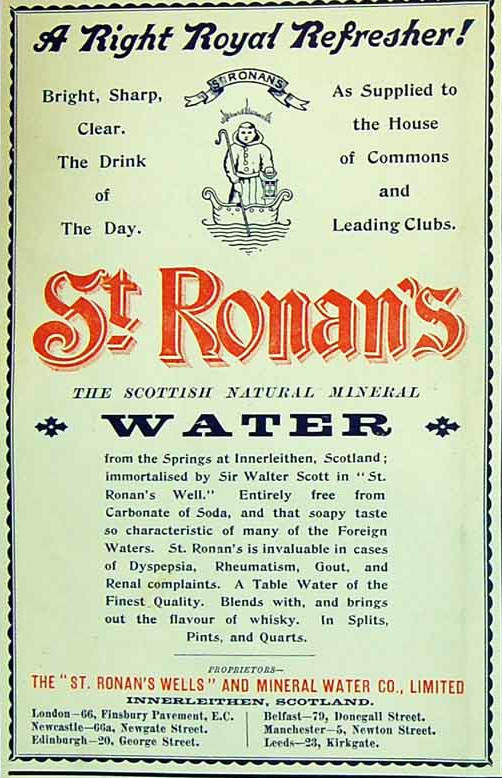
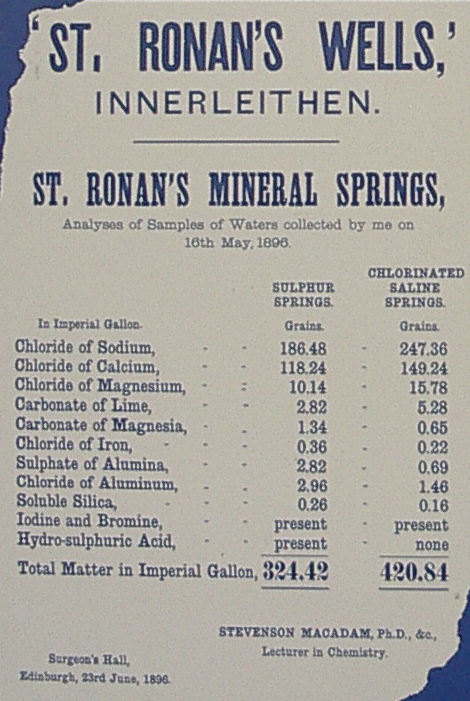
The St. Ronan’s Wells and Mineral Water Company company obtains a ninety-nine year lease. Water samples are analysed by Stevenson Macadam.
10th September 1896
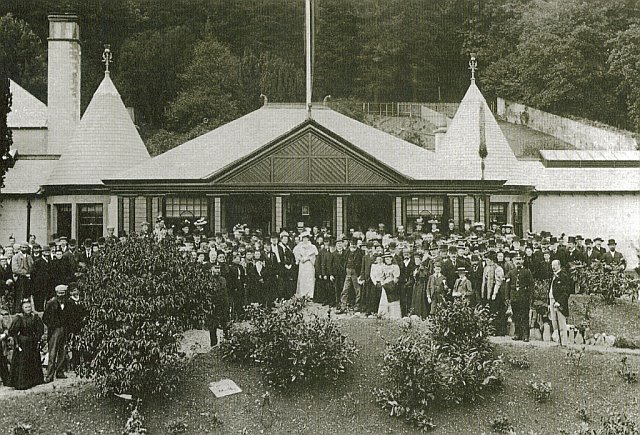
The grand opening of the new pavilion.
1900

1906
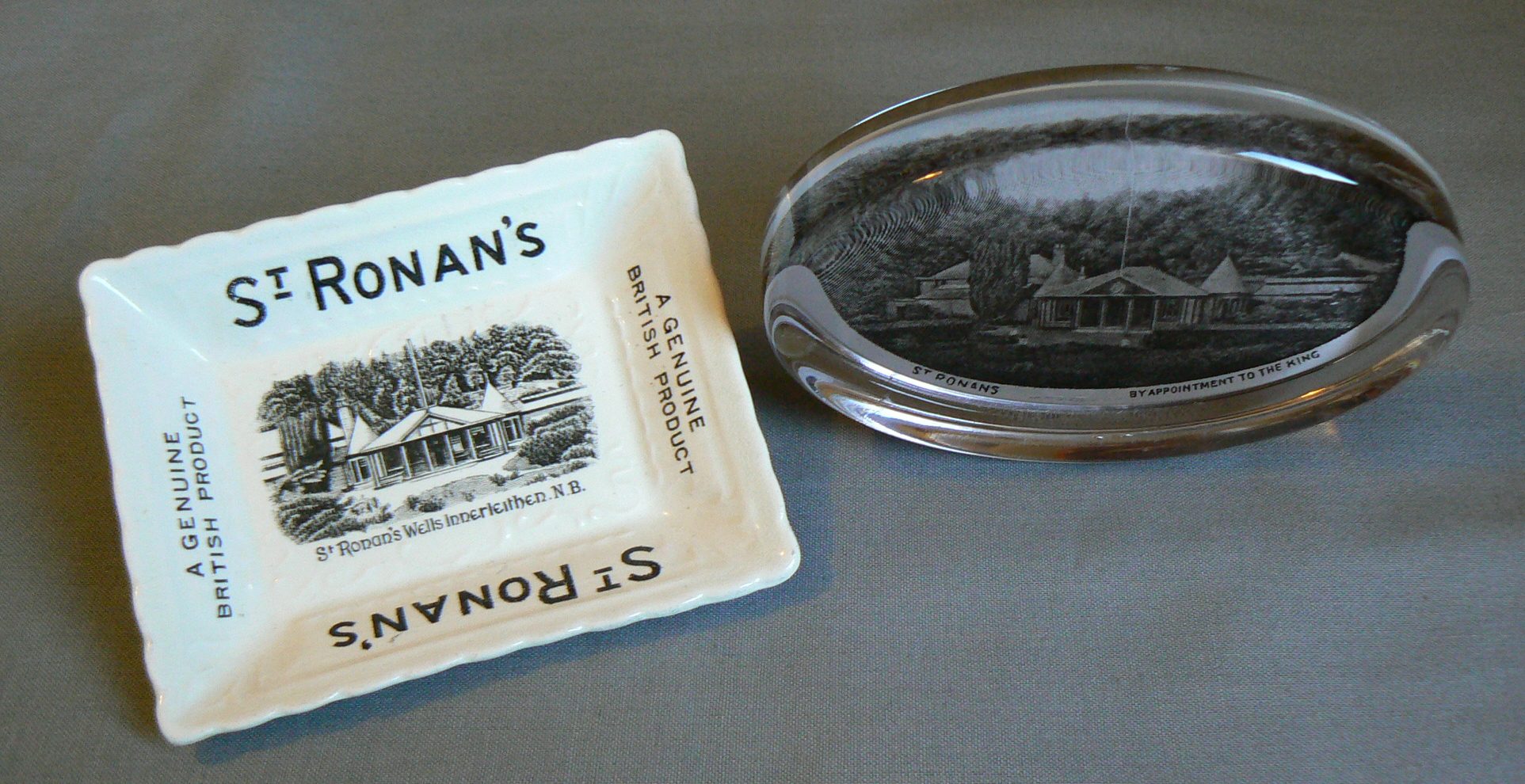
The business is sold to Harry Rawson an aerated water manufacturer from Joppa.
1910
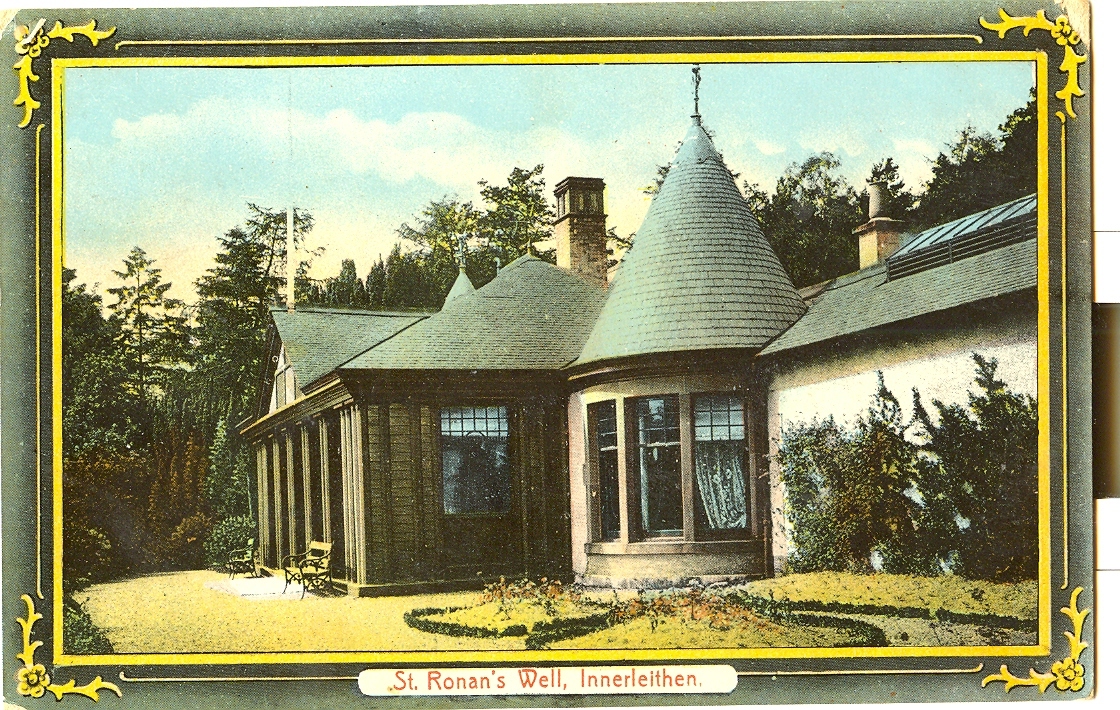
1913
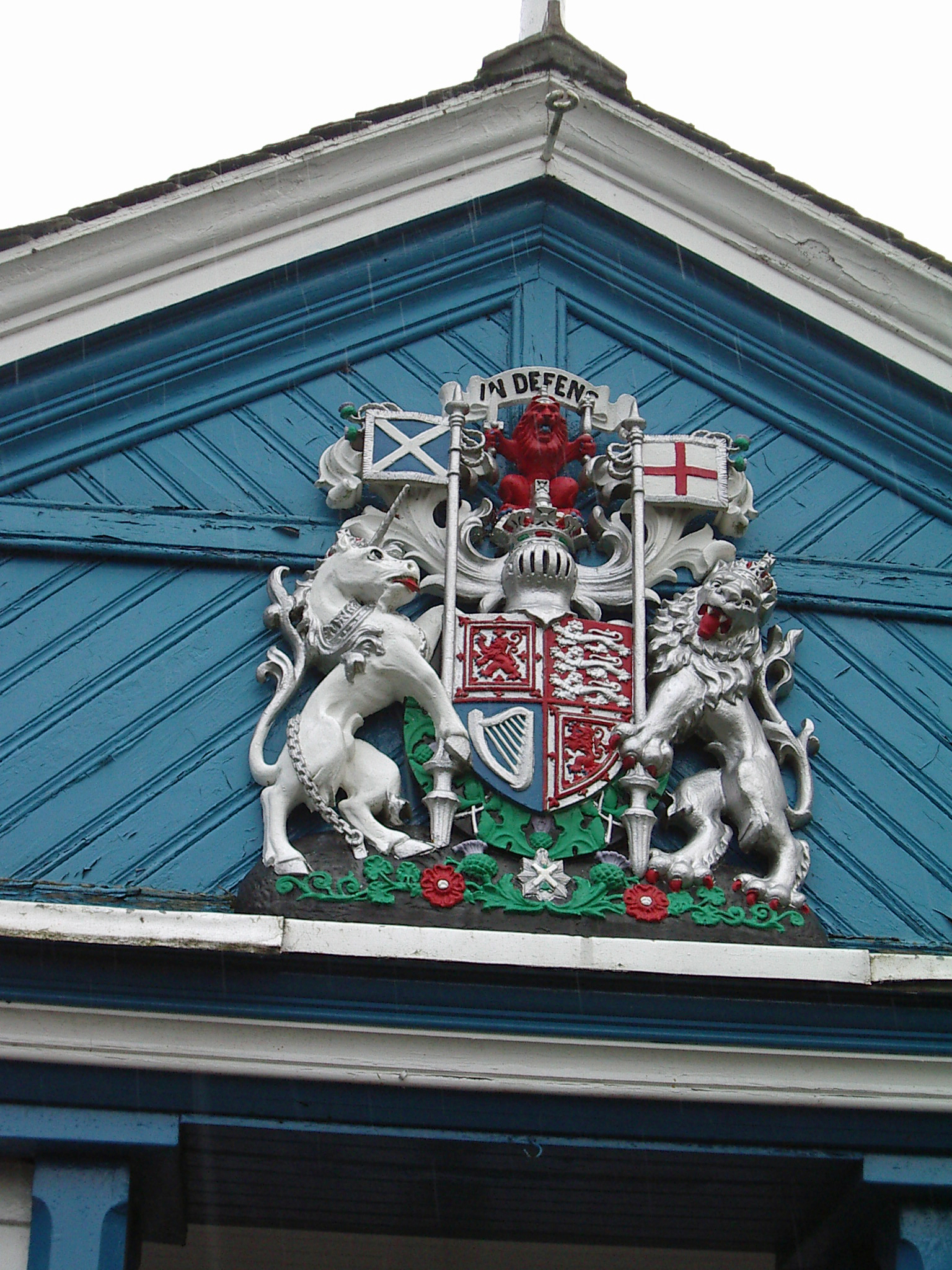
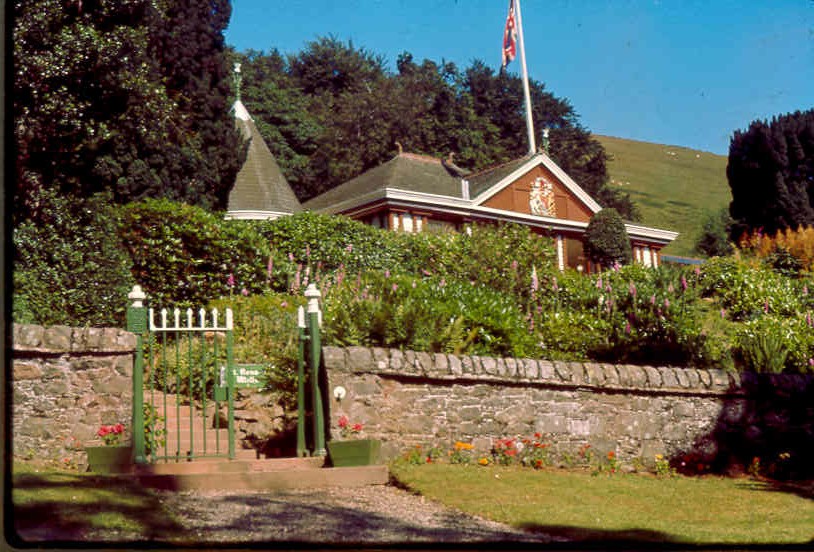
The Royal Warrant Coat of Arms was added to the pediment.
1935
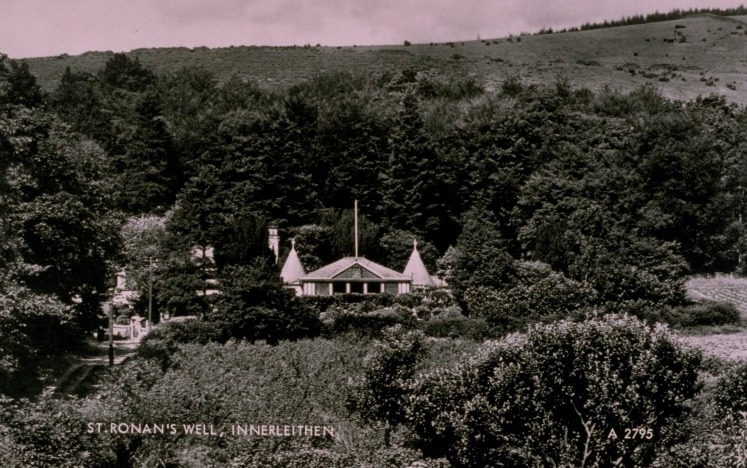
1939 – 45
Wells used as temporary accommodation for troops.
1948
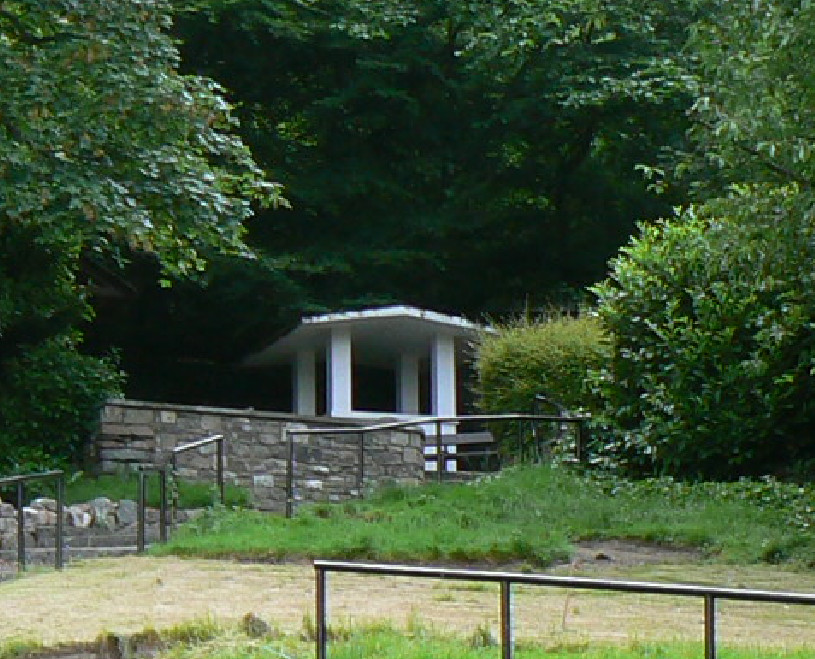
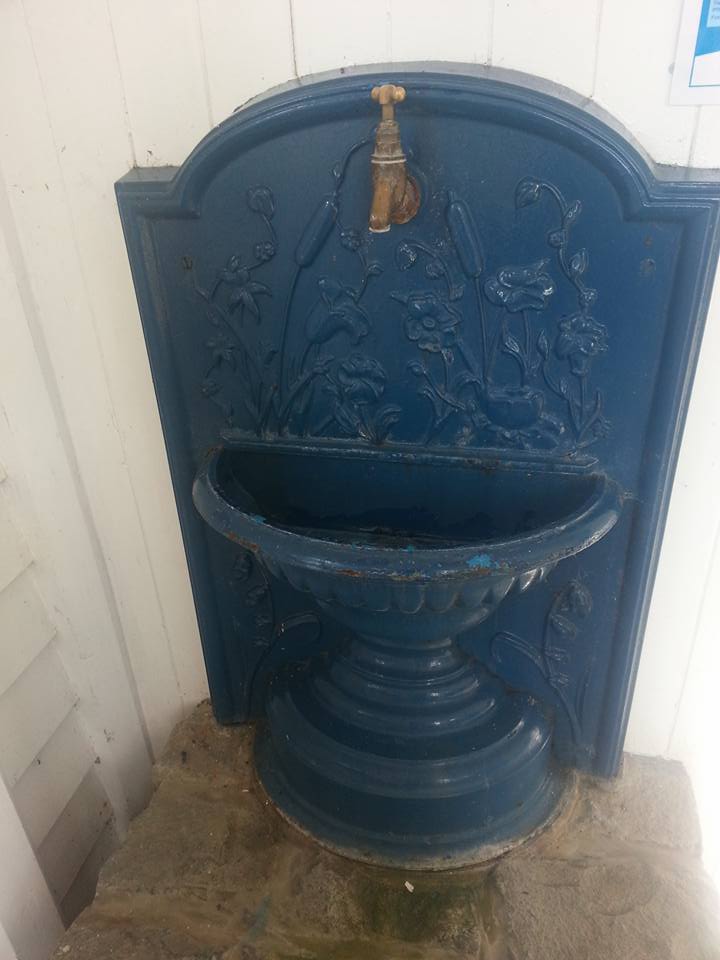
Present well installed
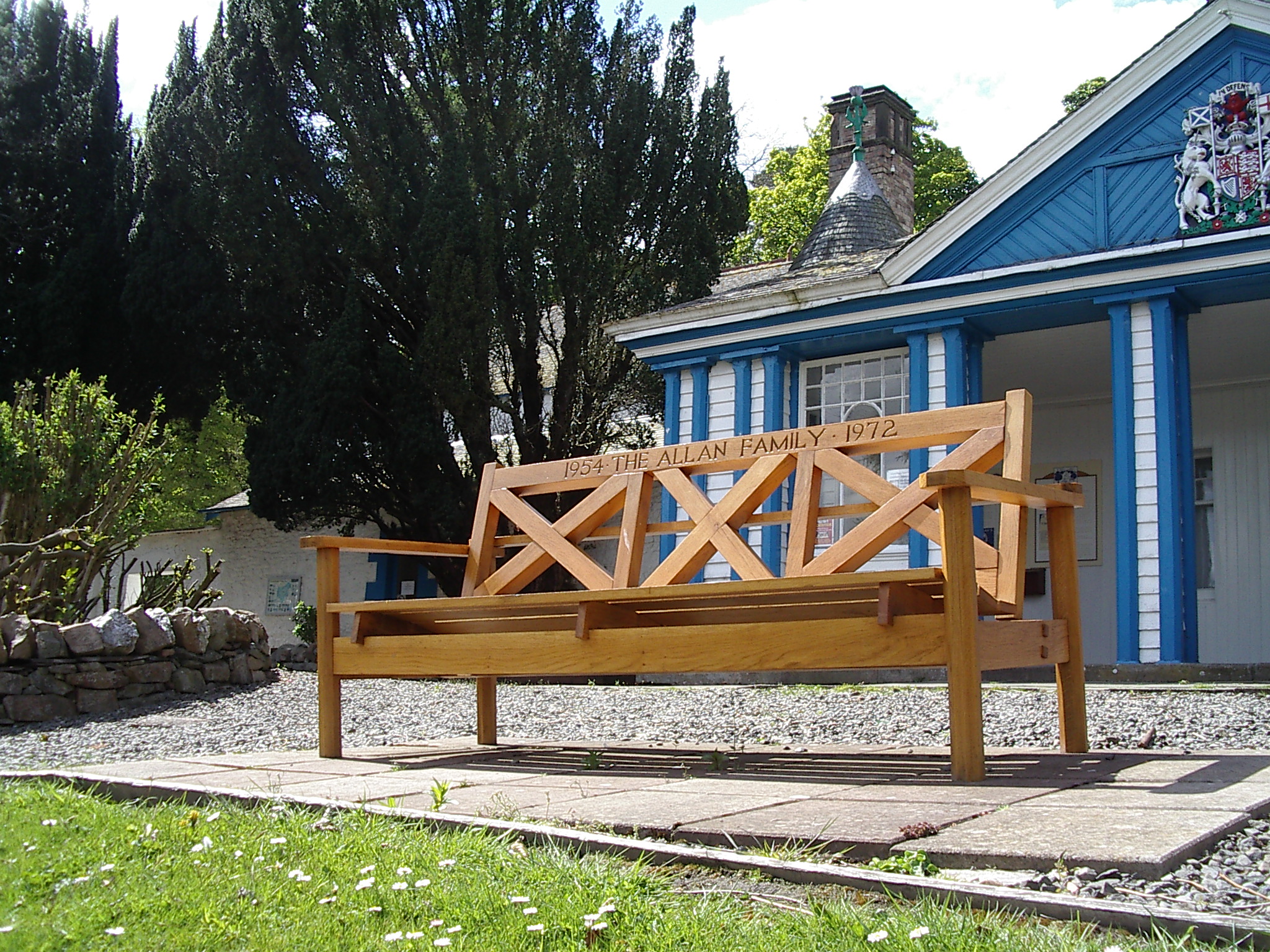
1954
Allan family installed as caretakers.They carry out repairs and make improvements to the building and gardens. Grounds open to visitors.
29th December 1966
St. Ronan’s Wells sold by Cairns and Rawson to Innerleithen Town Council for a nominal fee.
December 1972
Traquair Estates relinquish feu superiority over St. Ronan’s Wells.
19 May 1975
Local goverment reorganisation means adminstration falls to Tweeddale District Council a district of Borders Region.
1988
St. Ronan’s Wells Management Committee formed to raise additional capital for improvements.
July 1990
Interpretive and Fitness Centre (utilising the former bottling plant) opened.
1995
Fitness Centre equipment removed due to lack of use. Room continues as a visitor centre.
April 1 1996
Further local government reorganisation, the new Scottish Borders Council inherits the site.

2003
Formation of the St. Ronan’s Wells Support Group, local volunteers working with Scottish Borders Council staff to fund improvements to the visitor centre and gardens.
2007
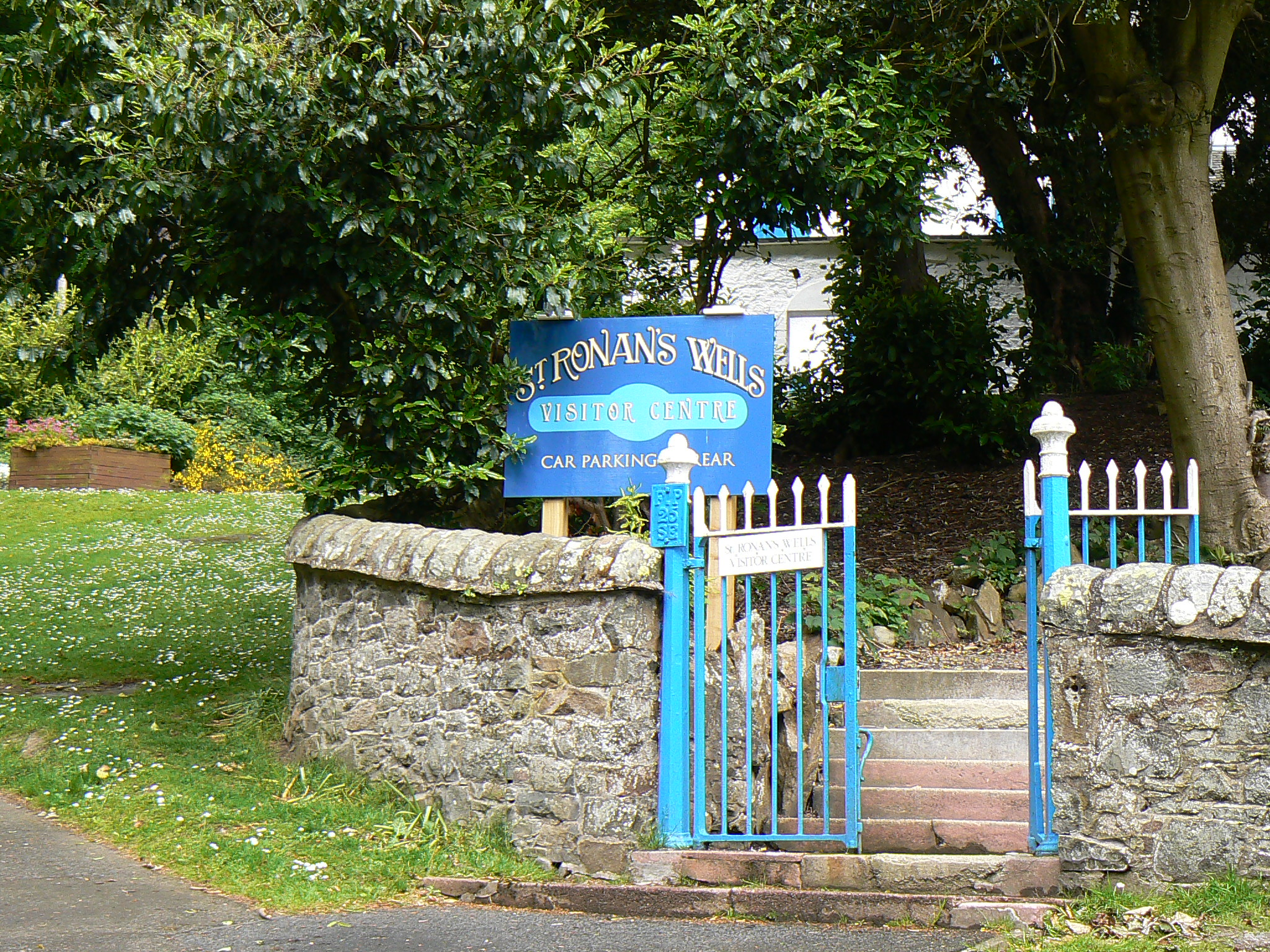
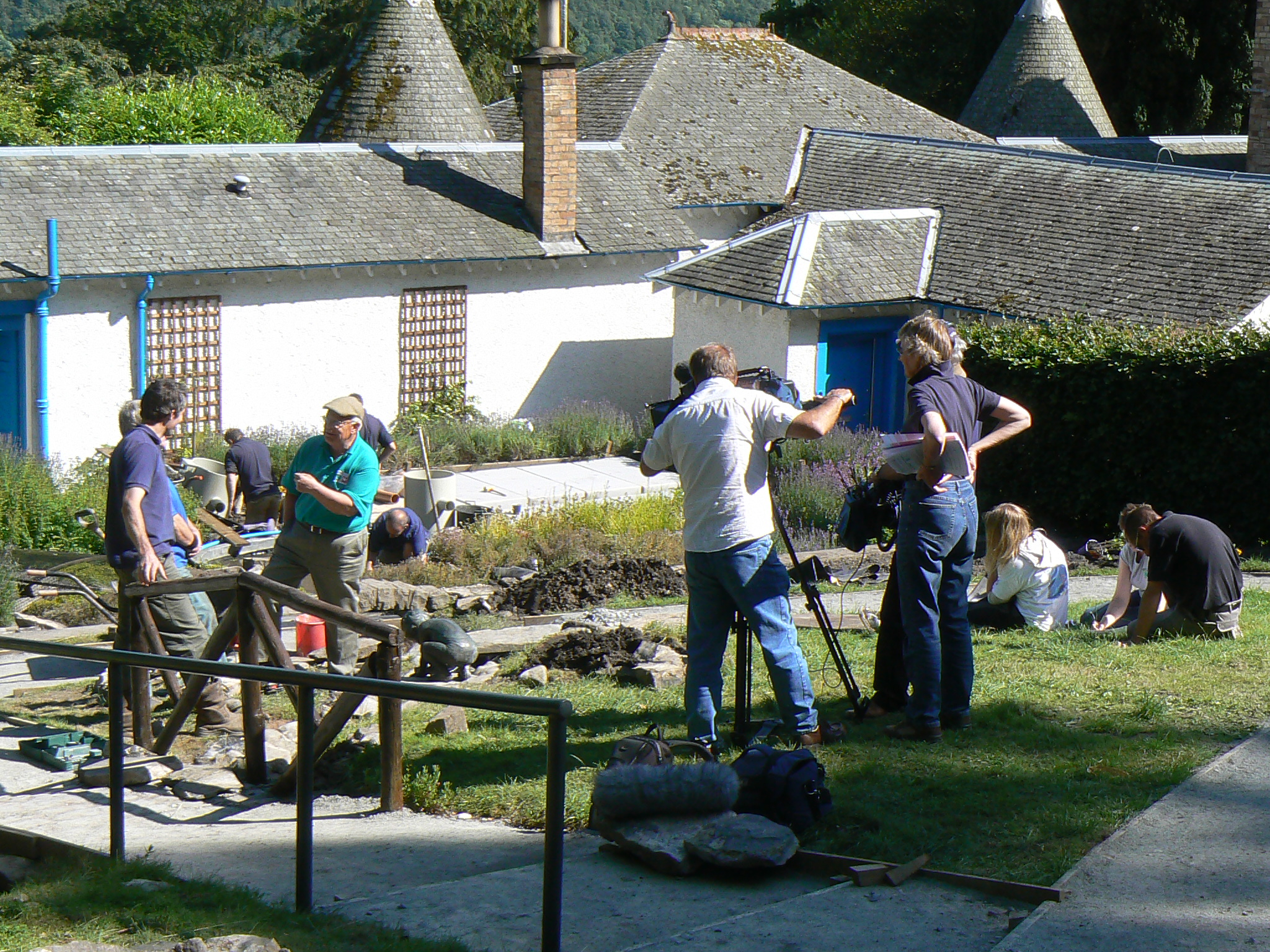
Beechgrove Garden (BBC) project to redesign and replant the gardens at the rear.
2015
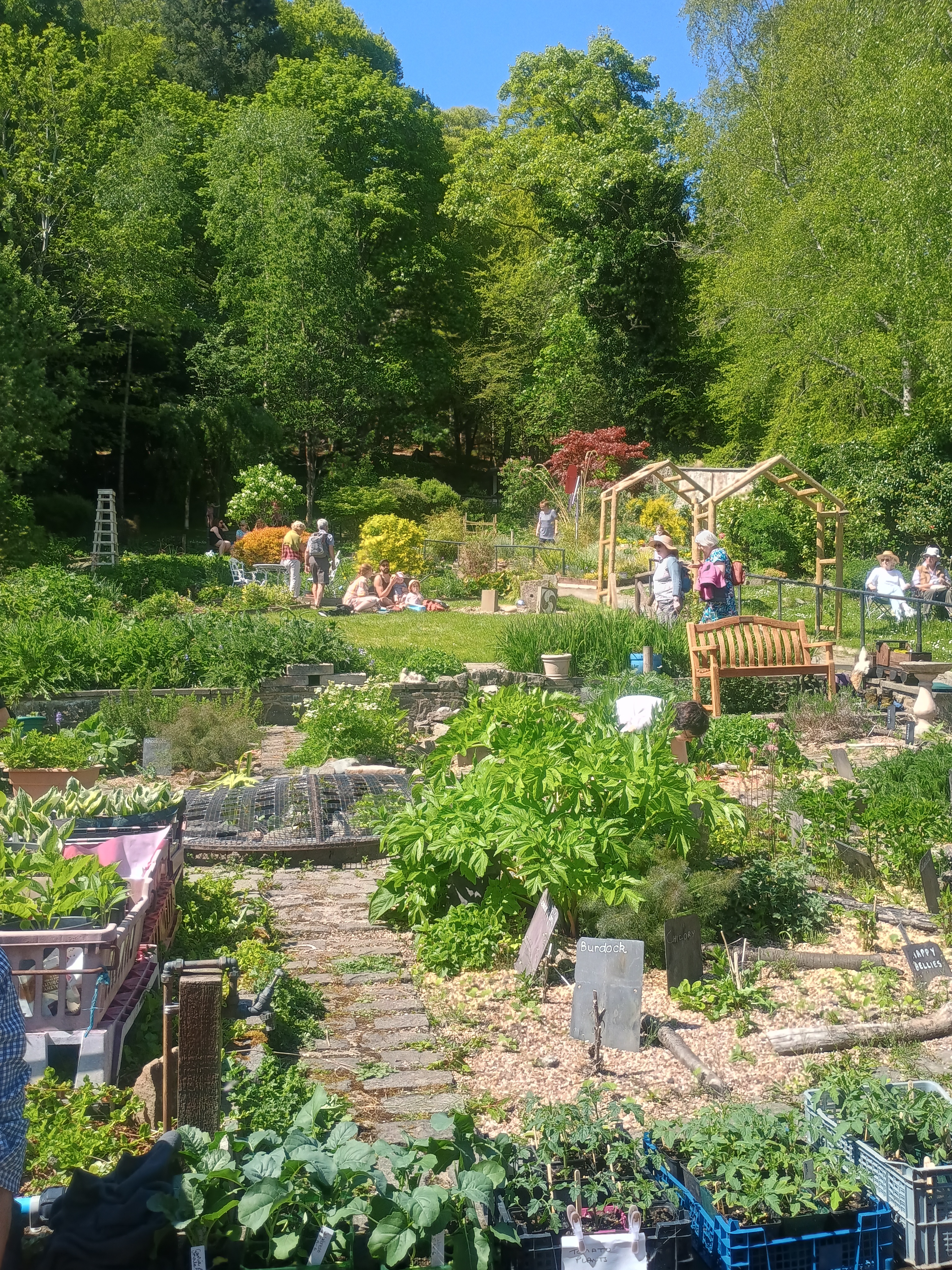
Jan Cameron creates a community garden in the grounds with support from volunteers and Innerleithen Community Trust.
1st April 2016
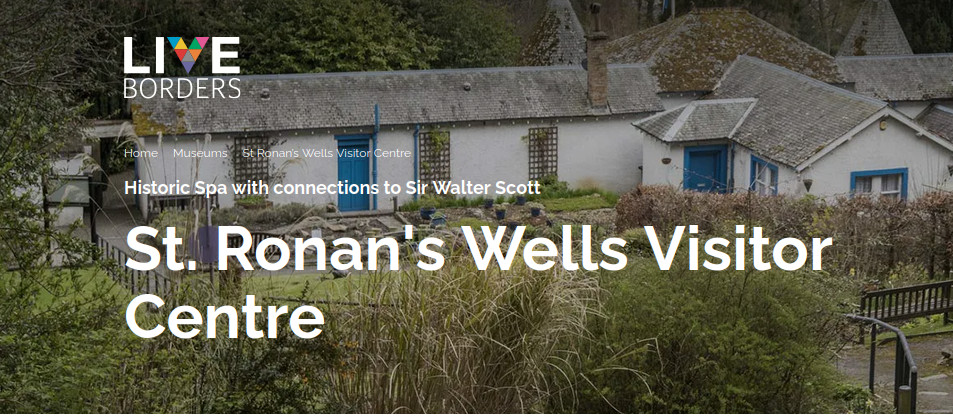
Cultural Services, including St Ronan’s Wells site are transferred from Scottish Borders Council to Live Borders.
2021
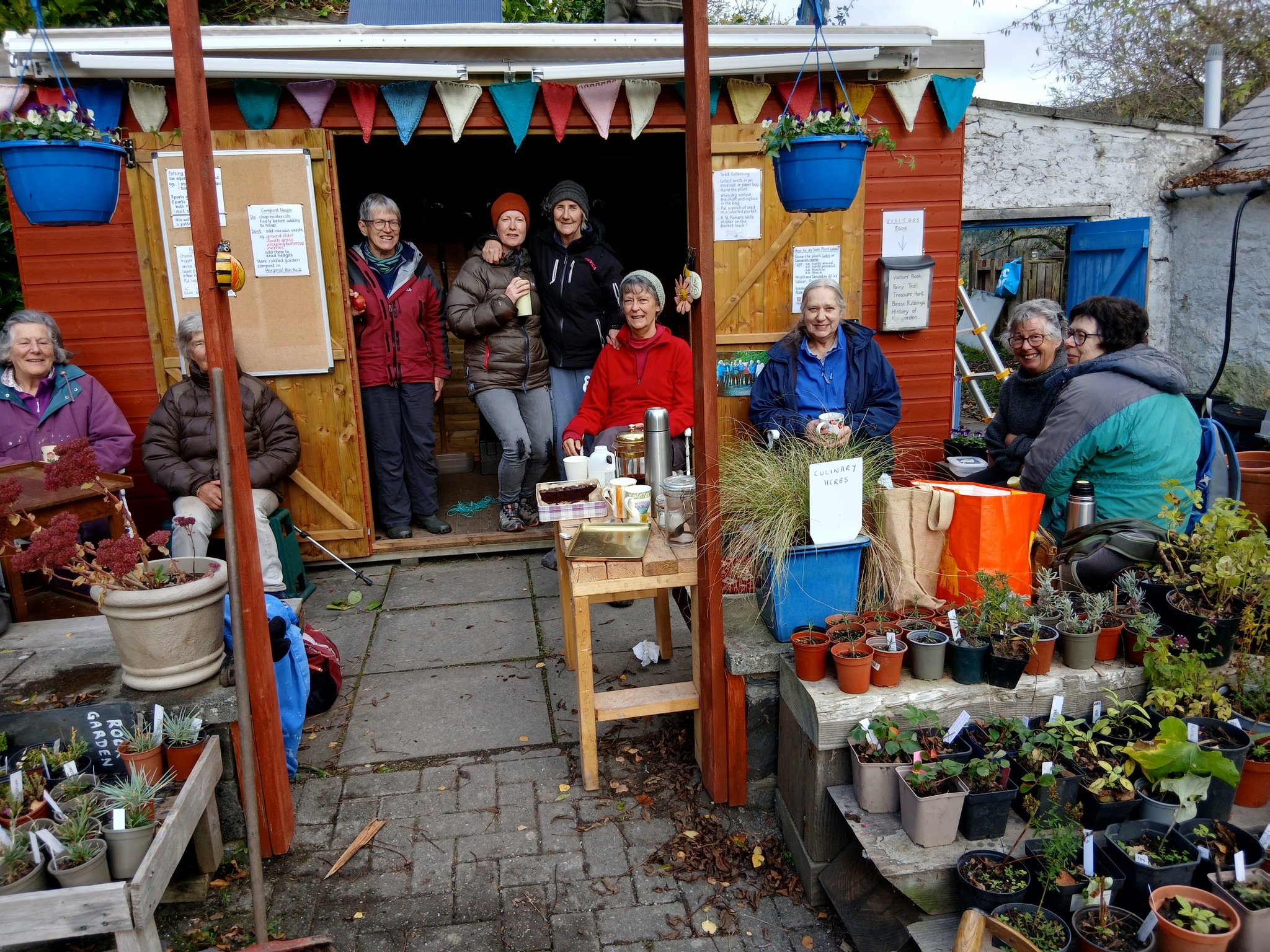
The Visitor Centre does not reopen after Covid-19 pandemic. The garden grounds continue to be maintained by volunteers.
November 2025
Council review of Live Borders services proposes closure on 31 March 2026 and dispose of the Visitor Centre though a community asset transfer or other means.
 St Ronans Wells Support Group